
Commercial real estate

Commercial Property Depreciation Calculator
Stop waiting 39 years to deduct your commercial building. See your estimated first-year tax savings (including tenant improvements and buildouts) in under 2 minutes.
★★★★★
4.8 on Google
$1.5B+
saved on taxes

Use the calculator to estimate commercial real estate depreciation

Cost segregation calculator: Add your property details to calculate potential accelerated depreciation expense utilizing a cost segregation study.
Trusted by thousands of property owners
Not a replacement for your CPA. This calculator gives you a planning estimate. Your free proposal includes the engineered study your CPA files with confidence.
★★★★★
"Excellent experience with R.E. Cost Seg. The team was knowledgeable, responsive, and easy to work with throughout the entire process. They answered all my questions promptly and provided clear guidance every step of the way. I appreciate their professionalism and customer-focused approach and would recommend them to anyone considering a cost segregation study."
Tamara Sorokovska
★★★★★
"Have used R.E. Cost Seg for 4 different cost seg studies and all have gone seamlessly, with a great product, at a great price. I appreciate the speed and efficiency, as well as the customer support. They make getting these done an easy and pleasant experience. Thanks!"
Jon Brenner
★★★★★
"Completed a Rapid Report for our recently purchased rental property. Working with R.E. Cost Seg was a great experience.

The Rapid Report process was straightforward and easy to complete for a 2-1 rental. The team was professional, responsive, and excellent at communication throughout. Documentation provided went straight to my tax professional - no questions, not clarifications required. Highly recommend them."
Andrew Byers

How to use this commercial depreciation calculator

1
Enter purchase price, land value, and placed-in-service date.
2
Choose the closest property type (Industrial/Storage, Office, Retail, Hotel/Lodging, Other).
3
Add renovation cost (buildouts, major upgrades, expansions).
4
Select bonus depreciation, tax rate, and tax filing year.

Understanding your results (No Study vs Baseline vs Optimal)

No Study
Standard depreciation without reallocation.
Baseline
Planning-range estimates for potential reallocation into shorter-life property.
Optimal
Planning-range estimates for potential reallocation into shorter-life property.
Key outputs
Estimated Year 1 Tax Savings
An estimate of how much your taxes could drop in the first year based on additional depreciation deductions (using your selected tax rate).
Estimated Year 1 Accelerated Depreciation
The portion of first-year depreciation that's 'pulled forward' via cost segregation (and bonus depreciation, if selected), above what standard depreciation would typically produce.
Net Depreciation Increase
The difference between accelerated depreciation and standard ('no study') depreciation, showing the incremental deduction created by the cost seg approach.
Deductions 1st 5 years
A cumulative estimate of total depreciation deductions over the first five years under each scenario (standard vs accelerated ranges).
Depreciation Over Time
A longer-term view of how depreciation deductions are spread across future years, illustrating timing differences (more deductions earlier vs later), not necessarily a change in total depreciation over the full life.
With cost segregation
Standard depreciation
HighLow
Y1Y2Y3Y4Y5Y6Y7Y8Y9Y10
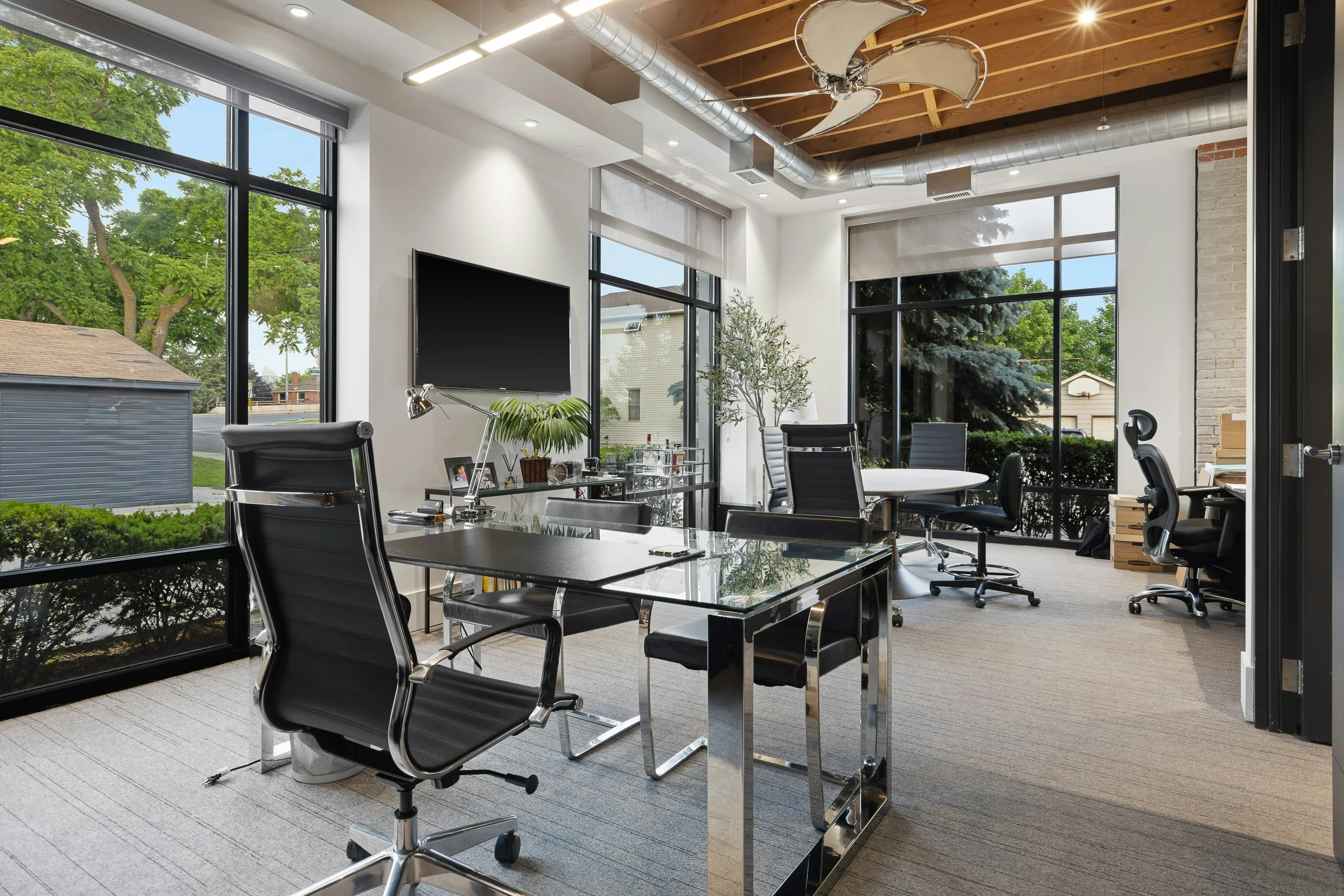
Tenant improvements and buildouts count, too
If you've built out suites, upgraded interiors, or funded tenant improvements, those are capital improvements you can depreciate.
Many of them on accelerated schedules.
Interior buildouts
Suites, partitions, finishes and fixtures
Tenant improvements
TI allowances and owner-funded upgrades
Project costs
Labor, materials and related capitalized costs
Why renovations can materially change commercial depreciation
Commercial properties often involve significant capital improvements. Adding renovation cost helps model whether acceleration could materially impact Year 1 and the first five years.
Year 1 deduction · illustrative
front-loaded swing
Standard Accelerated (cost seg)
Frequently asked questions
Why does the calculator show a range (conservative vs optimistic), and how should I interpret it?

Because the share of costs that can be reclassified into shorter-life property varies by building type, finishes, site work, and documentation. Conservative assumes a smaller reallocation; optimistic assumes a higher-end reallocation. Actual results depend on property-specific facts.

Does bonus depreciation apply to commercial real estate, and what typically qualifies?

Potentially. Bonus depreciation generally applies to eligible shorter-life property (often 5-, 7-, or 15-year components) that may be identified through cost segregation. The main 39-year building structure is typically not bonus-eligible. Availability and percentages depend on the tax year and eligibility rules.

Do tenant improvements (TI) and interior buildouts count toward depreciation, and should they be included as “renovation cost”?

Generally, yes, tenant improvements and buildouts are usually capital improvements that can be depreciated. Include qualifying capitalized costs (often labor + materials + related project costs) in the renovation/buildout input to estimate the incremental impact.

Is commercial depreciation different from residential rental depreciation (and what’s the standard schedule)?

Yes. Commercial buildings are typically depreciated over 39 years, while residential rental property is typically 27.5 years. The calculator uses these baseline conventions before showing potential acceleration ranges.

Request a free proposal to validate fit and narrow the estimate range.