
Project overview
This case highlights the tangible advantages of employing strategic tax planning and cost segregation for real estate investors in Georgia's dynamic market, underscoring the importance of informed financial strategies for long-term success.
Land value
456639
Year built
1970
Details
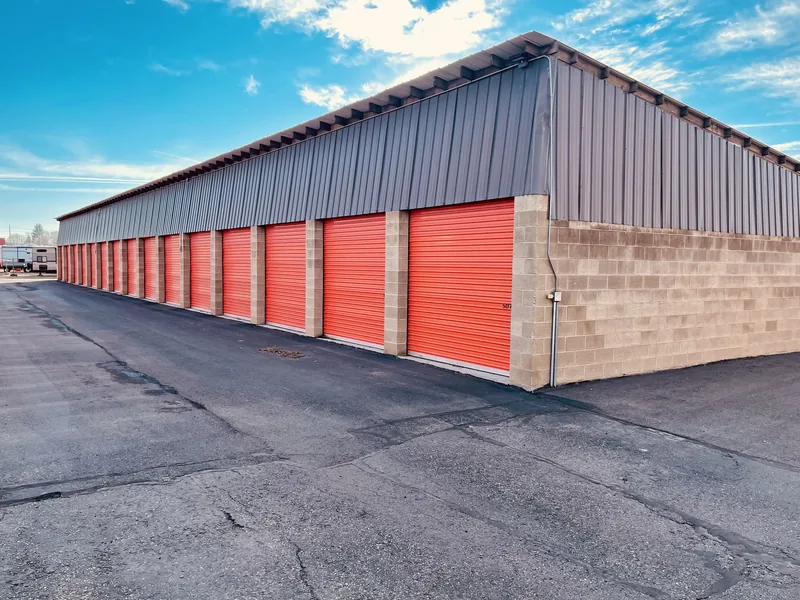
In 2025 our client acquired a self storage facility in Georgia for $3,850,000. To maximize their investment and optimize tax benefits, they engaged our team to conduct a comprehensive cost segregation study. Our analysis allowed us to identify and accelerate depreciation on various building components such as personal property and land improvements.
Results
The results were remarkable, with an impressive 92:1 payback ratio, leading to an estimated first-year tax savings of $461,125. By strategically reclassifying assets and shortening the depreciation timeline, the cost segregation study significantly reduced the investor's tax burden and enhanced their overall return on investment.
Year 1 Depreciation Comparison
Depreciation with cost segregation
Standard depreciation without cost segregation
3631
Where the depreciable basis went
Cost segregation studies are a valuable financial tool for storage facility owners. By reclassifying certain assets from the standard 39-year depreciation period to shorter recovery periods, such as 5, 7, or 15 years, storage facility owners can substantially increase their annual depreciation deductions. A cost seg study puts more money in your pocket to do things like invest in additional properties or allocate funds towards property maintenance, upgrades, or expansion.
Depreciable basis by recovery period
Recovery period
Allocated basis
Share
5-year property
522226
0%
7-year property
0
0%
15-year property
725392
0%
39-Year
2145743
0%
Total depreciable basis
3393361
100.00%
Depreciation over time
The study front-loads the deduction: a large first year, then a lower amount each year after.
1,1249913.63,3630.90 2,55016.86,87005.78 3,55016.86,87005.78 4,55016.86,87005.78 5,55016.86,87005.78 6,55016.86,87005.78 7,55016.86,87005.78 8,55016.86,87005.78 9,55016.86,87005.78 10,55016.86,87005.78 11,55016.86,87005.78 12,55016.86,87005.78 13,55016.86,87005.78 14,55016.86,87005.78 15,55016.86,87005.78 16,55016.86,87005.78 17,55016.86,87005.78 18,55016.86,87005.78 19,55016.86,87005.78 20,55016.86,87005.78 21,55016.86,87005.78 22,55016.86,87005.78 23,55016.86,87005.78 24,55016.86,87005.78 25,55016.86,87005.78 26,55016.86,87005.78 27,55016.86,87005.78 28,55016.86,87005.78 29,55016.86,87005.78 30,55016.86,87005.78 31,55016.86,87005.78 32,55016.86,87005.78 33,55016.86,87005.78 34,55016.86,87005.78 35,55016.86,87005.78 36,55016.86,87005.78 37,55016.86,87005.78 38,55016.86,87005.78 39,55016.86,87005.78 40,52806.77,83510.54
Share of total depreciation taken in year 1
0%
vs
0%
without a study
Depreciation taken in the first 5 years
$0
vs
$0
without a study
Frequently Asked Questions
The documentation requirements for a cost segregation study are straightforward. Essential documents include your closing statement or HUD-1 settlement statement, any existing depreciation schedule, and a cost ledger for capital improvements in spreadsheet format.
While not required, several documents can be helpful if available, including property appraisals, floor plans or architectural drawings, photos of the property. You don't need to provide individual receipts, though you should keep them for backup purposes.
Distinguishing between repairs and capital improvements is crucial for tax treatment and cost segregation eligibility. Capital improvements that qualify for cost segregation include betterments that improve the property beyond its original condition, restorations that return property to working order after it has fallen into disrepair, and adaptations that ready the property for a new or different use.
Examples include new HVAC systems, roof replacements, additions to the building, and comprehensive kitchen or bathroom remodels. In contrast, repairs that are deductible in the current year include routine maintenance activities, fixing existing components without upgrading them, painting, patching, minor replacements, and work that simply keeps the property in ordinary operating condition.
Several safe harbor elections can simplify these determinations, including the de minimis safe harbor allowing immediate expensing of items under $2,500 or $5,000 with an applicable financial statement, the routine maintenance safe harbor for qualifying maintenance activities, and the small taxpayer safe harbor for buildings with an unadjusted basis under $1 million.
Yes, cost segregation applies to leasehold improvements with some special considerations. Leasehold improvements are depreciated over 39 years for nonresidential property, or over the lease term if it's shorter than the applicable recovery period. Qualified Improvement Property may qualify for bonus depreciation under current law, making it particularly attractive for cost segregation.
Tenant improvements can be studied regardless of who pays for them, and the fact that improvements will eventually revert to the landlord doesn't eliminate the current tax benefits for the tenant. For ground leases, improvements built on leased land qualify for cost segregation using the appropriate recovery periods regardless of the lease term. However, you should consider whether certain costs should be amortized over the lease term rather than depreciated.
Your short-term rental is classified as 39-year nonresidential real property because of the IRS's "transient use" rule. According to IRS Publication 946, while residential rental property typically depreciates over 27.5 years, there's a critical exception: dwelling units do NOT include "a unit in a hotel, motel, or other establishment where more than half the units are used on a transient basis."
The IRS considers properties used on a "transient basis" to be those with average guest stays of less than 30 days, which captures most Airbnb and VRBO properties. Even though your property might be a single-family home or condo that looks exactly like a traditional rental, if you're operating it as a short-term rental with typical stays of a few days or weeks, it's treated like a hotel for tax purposes.
Since you're stuck with the slower 39-year base depreciation, cost segregation studies become even more valuable for STR owners. You can typically reclassify 20-35% of your property's components into 5, 7, or 15-year assets, partially offsetting the disadvantage of the 39-year classification.
The virtual inspection is an essential part of the Fully Engineered Study, designed to be both thorough and convenient. It is conducted over a video call (via platforms such as Google Meet or Zoom) and typically lasts 30–60 minutes, depending on the property’s size.
During the session, a person with property access — such as a property manager, tenant, or contractor — uses a smartphone to guide our Site Visit Specialist through the property. The specialist provides step-by-step instructions to ensure all necessary areas and components are properly documented.
For those who prefer an in-person visit, we also offer an on-site inspection for an additional fee depending on location.
There are two study options based on property characteristics. The Rapid Report (starting at $950) suits properties with depreciable basis under $1.2M, capital improvements under $80K, and residential properties under 3,500 sq ft—ideal for single-family homes, condos, and small multifamily. It uses a detailed questionnaire instead of inspection, with about a 5 business day turnaround.
The Fully Engineered Study (from $2,320) is required for properties exceeding these limits, all commercial properties regardless of size, and renovations over $80K. It includes virtual or on-site inspection with detailed component analysis and takes 15-20 business days. The key difference is methodology: Rapid Report uses software-based questionnaire analysis while Fully Engineered includes comprehensive site inspection, document review, and detailed engineering analysis. Both are IRS-compliant and include audit support.